From juré to Zydeco — the sound of Creole Louisiana, on a larger stage in 2026.
At Creole Culture Day, the music isn't a stage you watch from the back — it's the pulse of the whole day. From the morning fire to the last dance, juré, Creole, and Zydeco carry the story of who we are. This isn't just an event; it's an experience you stand inside of. And in 2026, it lives on a bigger stage.
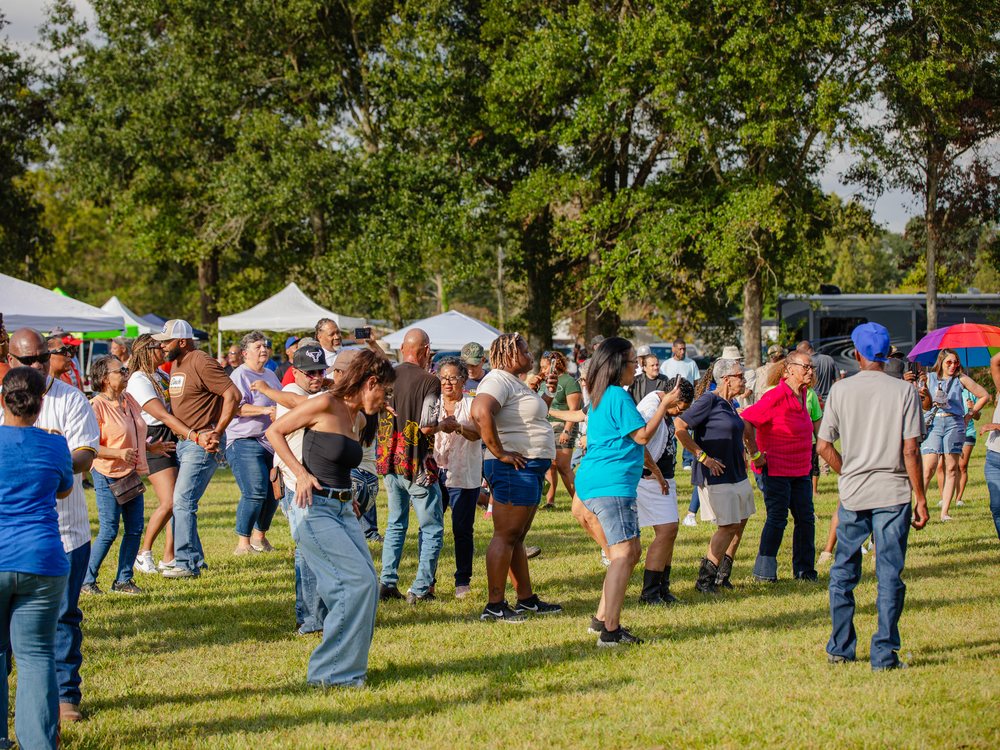
From the moment the grounds open, the day has a soundtrack. Our DJ sets the tone — Creole, Zydeco, and Louisiana sounds — while the boucherie smokes, the boudin and cracklin cook, the genealogy hub fills up, and the Creole French bingo cards come out. The mixes keep the rhythm steady and turn the grounds into one shared celebration. Families settle in, conversations spark, and the first dancers step onto the grass. As the afternoon builds, the live stage takes over — and the soundtrack never stops.
What started on porches now fills dancehalls, trail rides, and festivals around the world. Accordion melody, washboard rhythm, and a beat that will not let you stay seated. Here on the grass in St. Landry Parish it takes its truest form: people gathering outdoors and dancing the way our families always have. Bring your dancing shoes. Two men are carrying it this year.
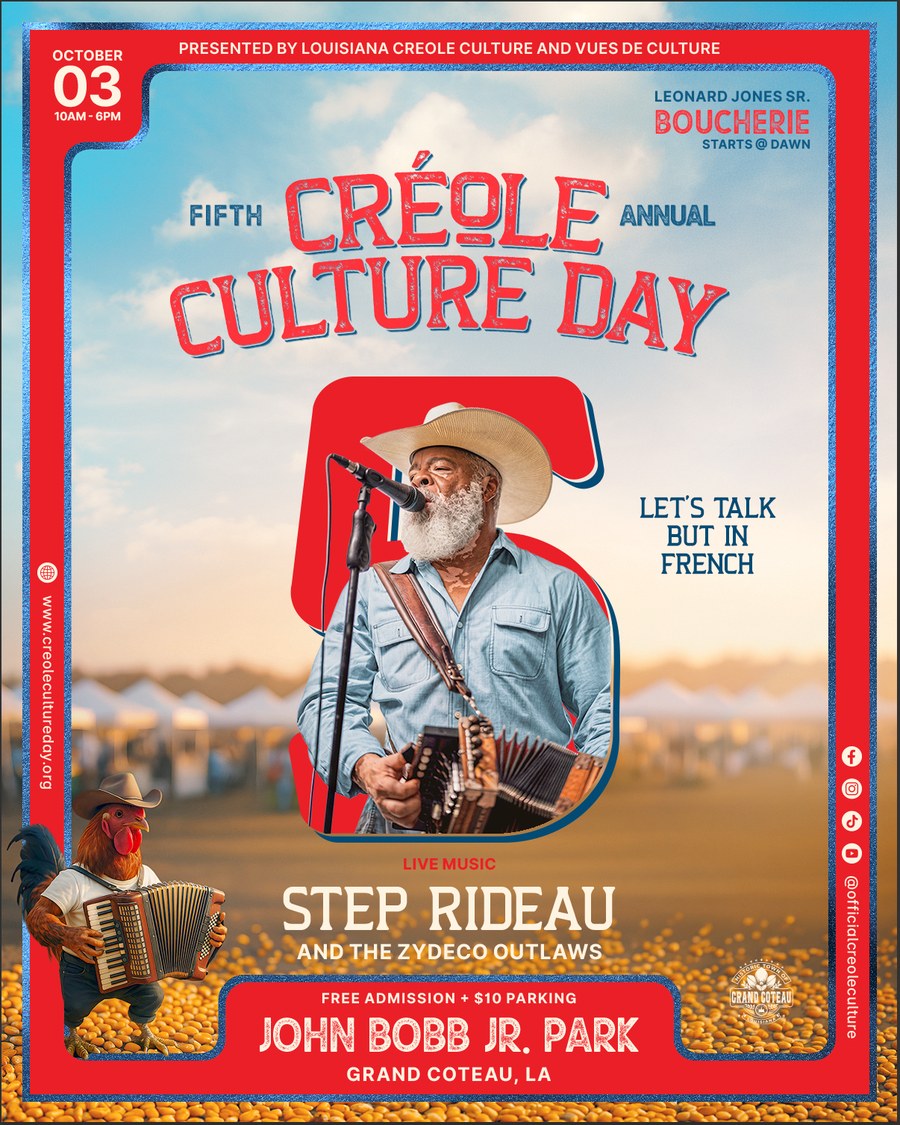
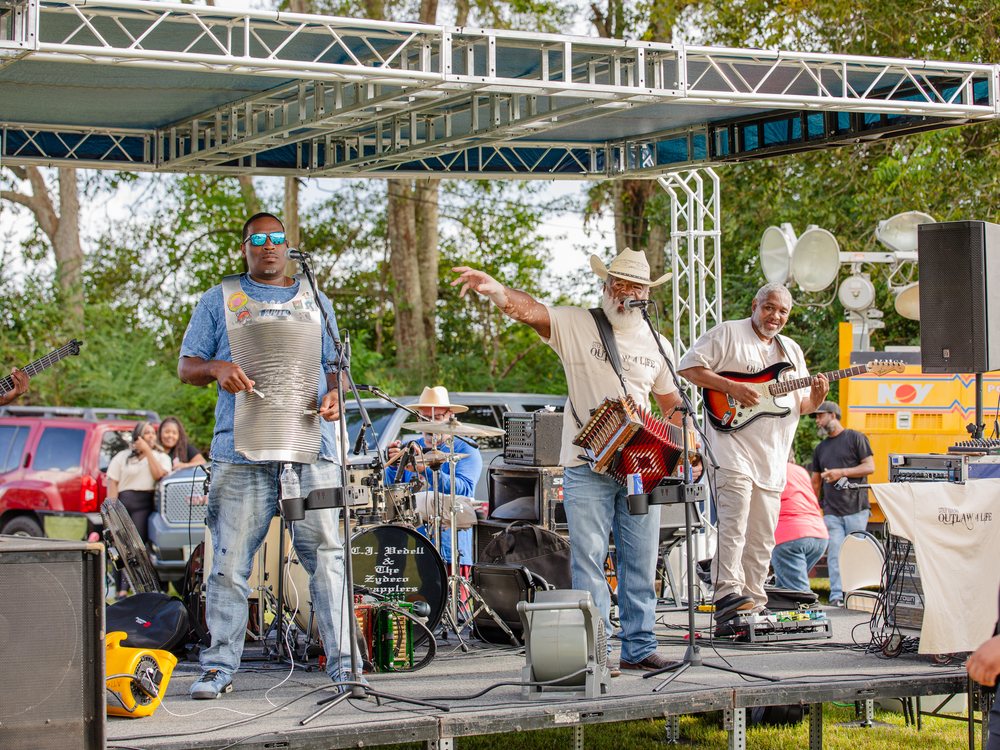
and the Zydeco Outlaws
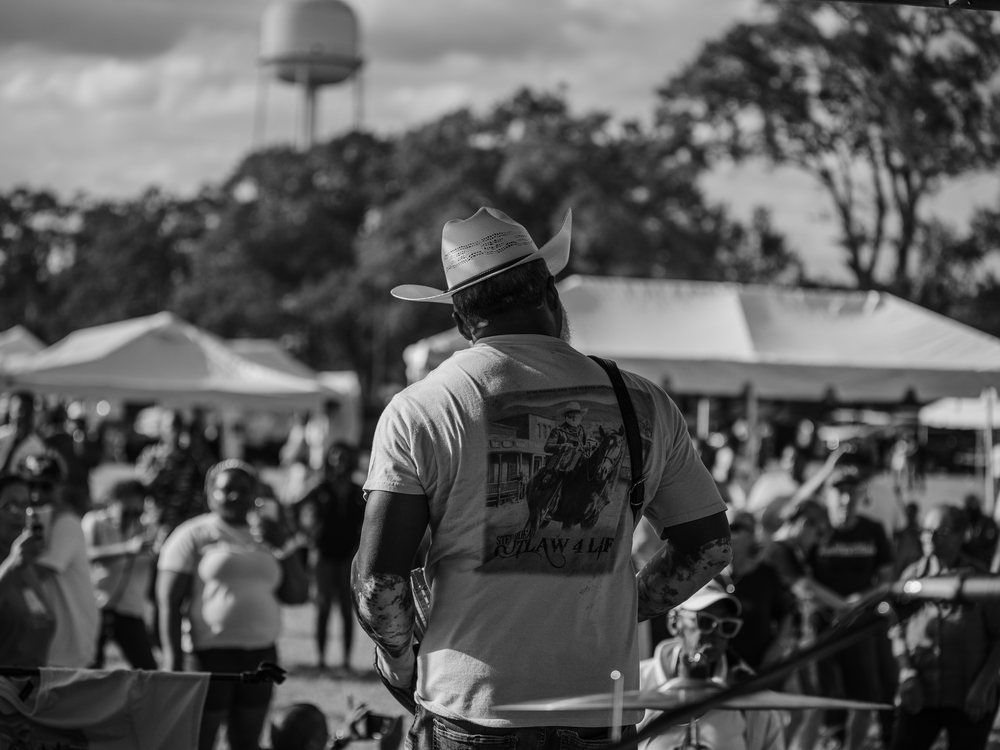
Step Rideau was born in Lebeau, twenty minutes up the road from Grand Coteau, and he did not pick up an accordion until he had already left for Houston in the mid 1980s. He learned it there, in a city full of Louisiana families who had moved for work and brought the music with them, and he built the Zydeco Outlaws around it. He sings in English and in Creole French, and after two decades of records and festival stages he plays like a man who never lost the accent. He is coming home to close the day.
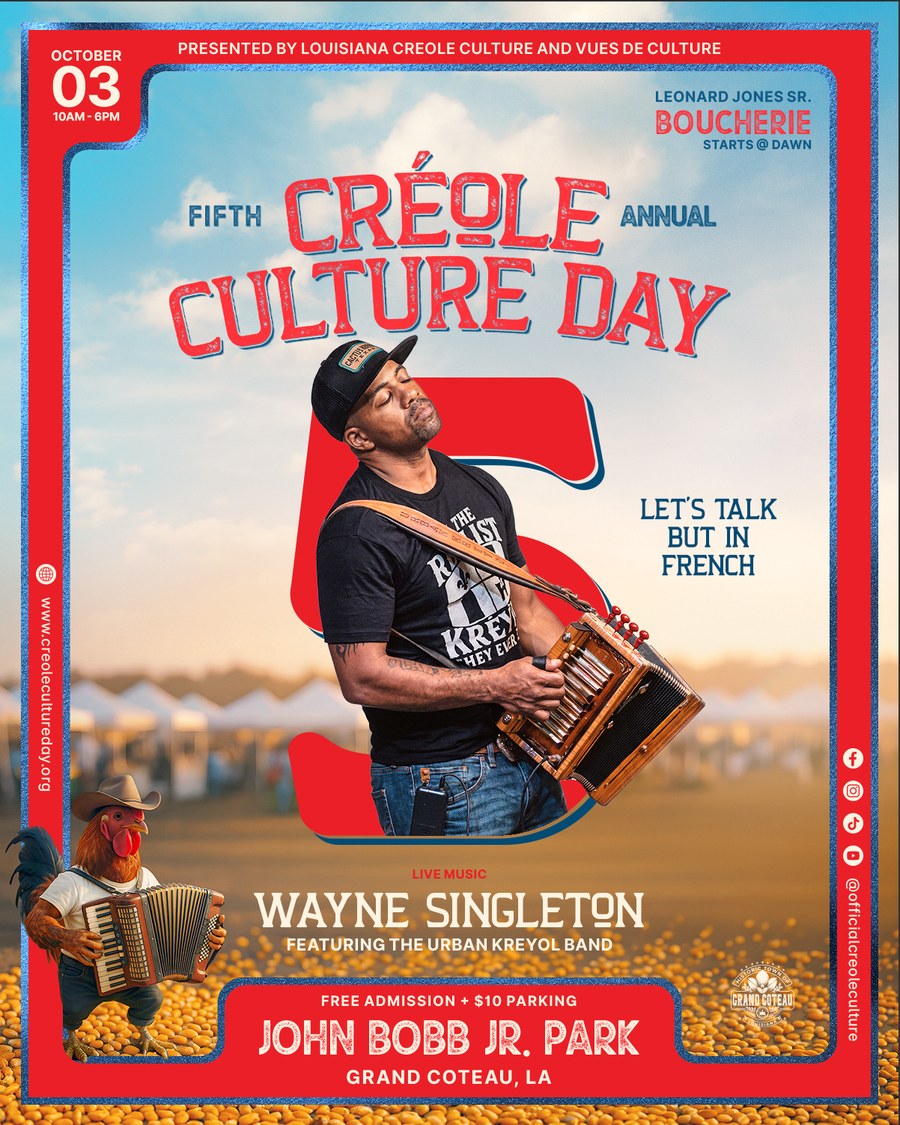
featuring the Urban Kreyol Band
Wayne Singleton came up in Lewisburg and started playing zydeco at seven years old, taught in the tradition by the late Roy Carrier, whose club in Lawtell raised half the players in this parish. He learned every instrument in his own band, writes most of what he records, and has put out seven albums while carrying the sound through the United States and Europe. What he plays is young and it is loud, and the roots under it go straight back to the trail rides.
Before zydeco filled a dancehall it filled a front room. Families pushed the furniture aside and pulled out fiddles, accordions, washboards, and voices. Part celebration, part teaching, part pure joy. Those same sessions grew into the trail rides and the stages we know now, and we keep one going here: elders trading verses with the young, neighbors jumping in, visitors standing close enough to feel it.
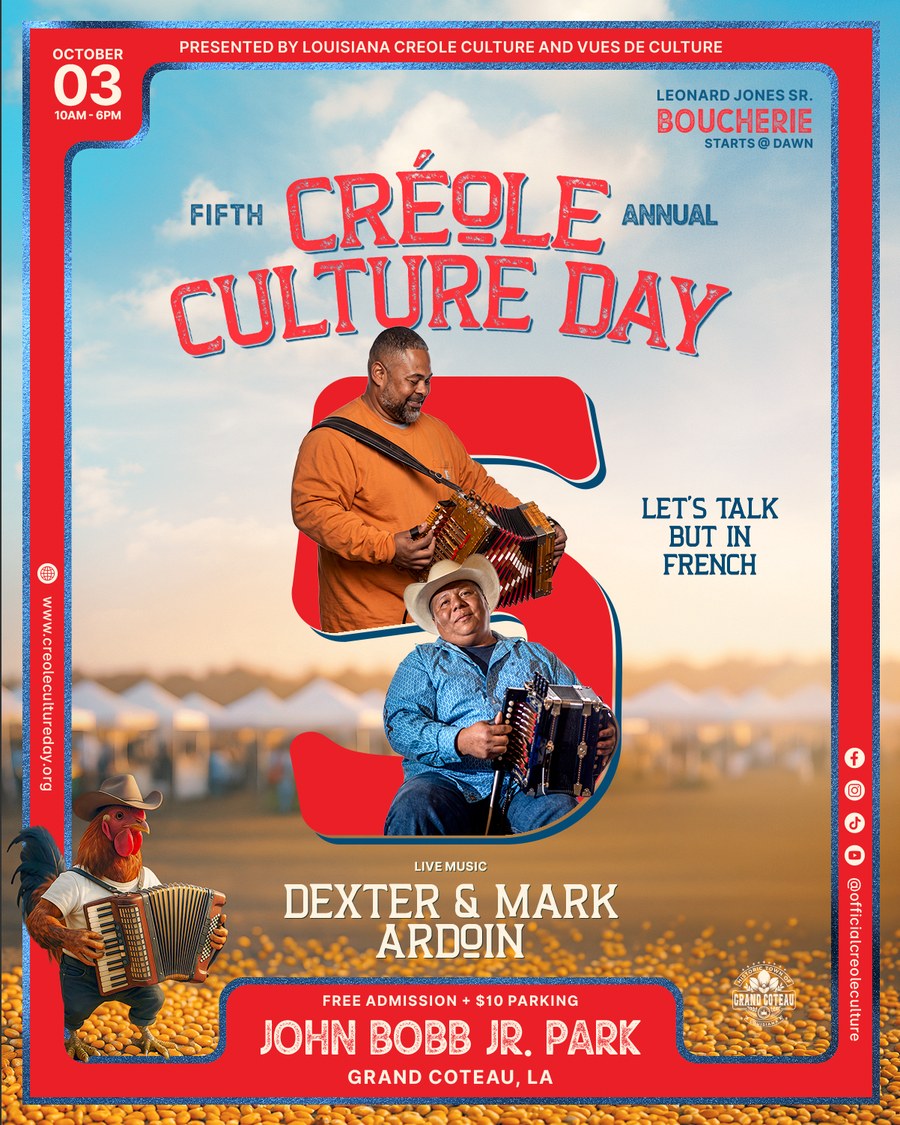
Grandsons of Alphonse “Bois Sec” Ardoin
The Ardoin name is where this music starts. Amédé Ardoin made the first recordings of Creole accordion in the late 1920s and early 1930s, and everything after them is built on that. Alphonse “Bois Sec” Ardoin carried it for sixty years and received a National Heritage Fellowship for it. Dexter leads the Creole Ramblers and has taken the old songs abroad. Mark plays the same line from the same parish. The two cousins sit in together the way it was always done at home, before anyone thought to put it on a stage.
Walk the sound all the way back and the instruments fall away. What is left is juré: voices lifted together with handclaps, stomps, and call and response, a line that runs through this parish to West Africa. Music that needs nothing but people. It is where the rhythm of this culture begins, and it is still sung here.
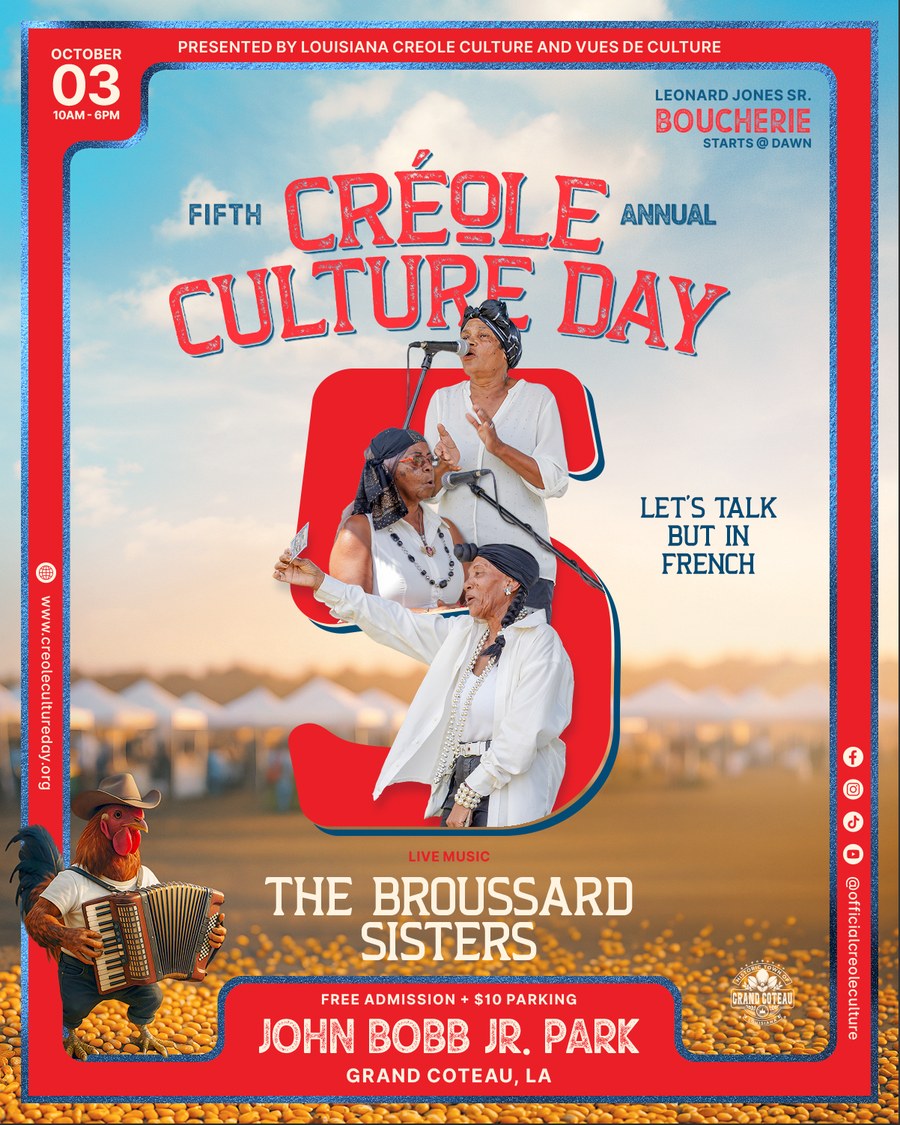
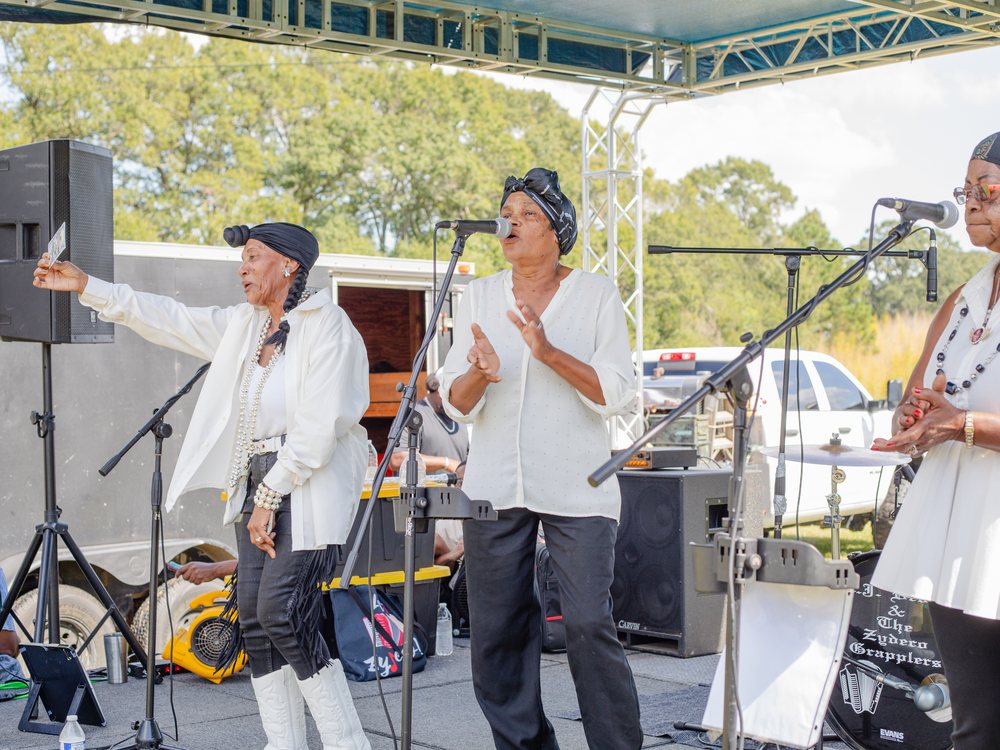
Sandra B. Davis, Virginia Bellard and Octavian Seraile
The Broussard family of Opelousas sang juré during Lent, when the dancehalls were closed to them and the instruments stayed in the case. The sisters have carried it in public since 1996, and in 2023 the Broussard Family Juré was inducted into the Louisiana Folklife Center’s Hall of Master Folk Artists. They sing the oldest thing on the grounds.
Set times post closer to the day. Follow Official Creole Culture for the schedule.
Saturday, October 3, 2026 · John Bobb Jr. Park, Grand Coteau · free & open to all.
Plan Your Visit — Free